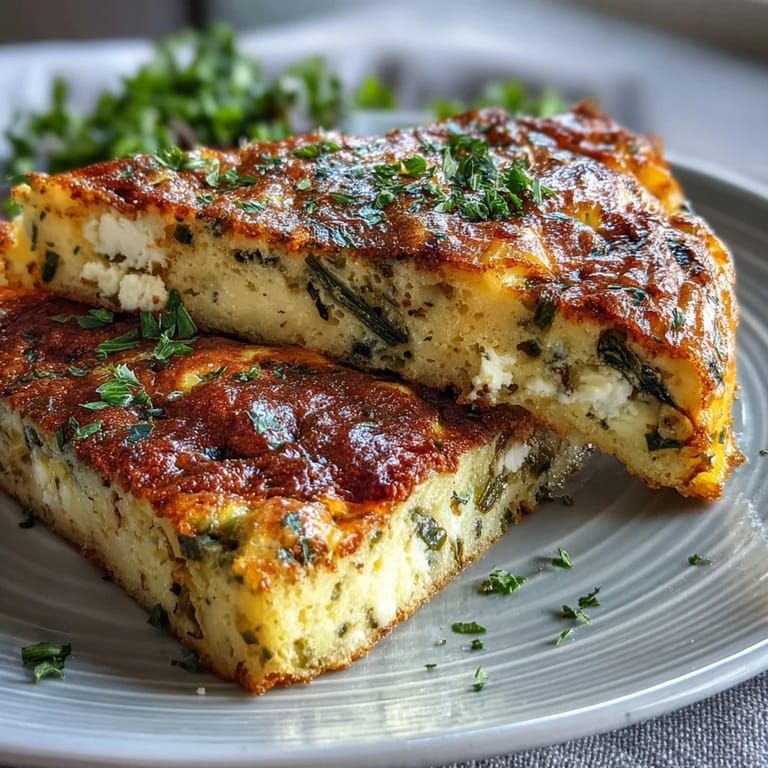
 Save to Pinterest
 My neighbor knocked on the door one Saturday morning with a basket of just-picked asparagus from her garden, and I stood there holding those tender spears thinking, what now? That's when I remembered my grandmother's kitchen in Tuscany, where eggs were never just breakfast—they were a canvas. I threw together what I had on hand: goat cheese that had been softening on my counter, fresh dill from a pot by the window, and suddenly this light, fluffy frittata emerged from the oven. It's become my go-to when I want something that feels both effortless and special.
I made this for a small brunch last April when my sister was visiting from out of town, and I'll never forget how she cut into it, took one bite, and asked for the recipe before she'd even finished chewing. We sat at the kitchen table in the afternoon light, eating warm slices straight from the pan, and she told me stories I'd never heard before. That frittata was just eggs and vegetables, but somehow it created the kind of space where real conversations happen.
Ingredients
- Asparagus: Trim the woody ends by snapping them where they naturally break—you'll know you've found the right spot when it feels right in your hands, and you'll waste nothing.
- Red onion: Finely chopped red onion adds a subtle sweetness and a whisper of sharpness; don't skip it just because you can't see big pieces.
- Baby spinach: Use fresh spinach here—frozen turns watery and muddy the whole thing, trust me on this one.
- Eggs: Room temperature eggs blend more smoothly with the milk, creating that signature fluffy texture you're after.
- Whole milk: It lightens the eggs without making them taste thin or watery like water would.
- Goat cheese: Crumbled goat cheese melts just enough during cooking to create those creamy pockets throughout; it never gets rubbery.
- Parmesan cheese: The grated kind adds a salty, umami depth that makes people ask what secret ingredient you used.
- Fresh chives and dill: These aren't decorative—they're essential for that fresh, green brightness that makes this taste like spring.
- Olive oil and butter: The combination gives you richness without letting anything stick or burn.
Tired of Takeout? 🥡
Get 10 meals you can make faster than delivery arrives. Seriously.
One email. No spam. Unsubscribe anytime.
Instructions
- Get your oven ready:
- Preheat to 180°C (350°F) so it's waiting for you when the frittata edges start to set.
- Sauté the aromatics:
- Heat olive oil in your ovenproof skillet over medium heat and cook the red onion until it turns soft and slightly translucent, about 2–3 minutes. You'll smell the sweetness release into the air.
- Add the asparagus:
- Toss in the asparagus pieces and let them cook for 4–5 minutes, stirring occasionally, until they turn bright green and just tender. Don't walk away here—listen for the quiet sizzle that tells you things are happening.
- Wilt the spinach:
- Add the spinach and stir gently until it's completely softened, about a minute. It'll collapse faster than you'd expect.
- Prepare the egg mixture:
- In a separate bowl, whisk together eggs, milk, salt, black pepper, and half your herbs until they're pale and slightly frothy. This step matters more than it sounds.
- Lower the heat and add eggs:
- Turn the burner to low and pour the egg mixture over the vegetables in an even layer, making sure nothing's crowded to one side. Scatter the goat cheese on top and finish with a light shower of Parmesan.
- Let the edges set on the stovetop:
- Leave it completely untouched for 4–5 minutes—no stirring, no poking. You're looking for the edges to firm up while the center stays slightly loose and glossy.
- Transfer to the oven:
- Move the whole skillet to the preheated oven and bake for 10–12 minutes until the center is set and the top has just turned pale golden. A frittata should never look dry.
- Rest and finish:
- Pull it from the oven and let it sit quietly for 5 minutes—this settles everything and makes it easier to slice. Scatter the remaining herbs and a tiny pinch of red pepper flakes over the top just before serving.
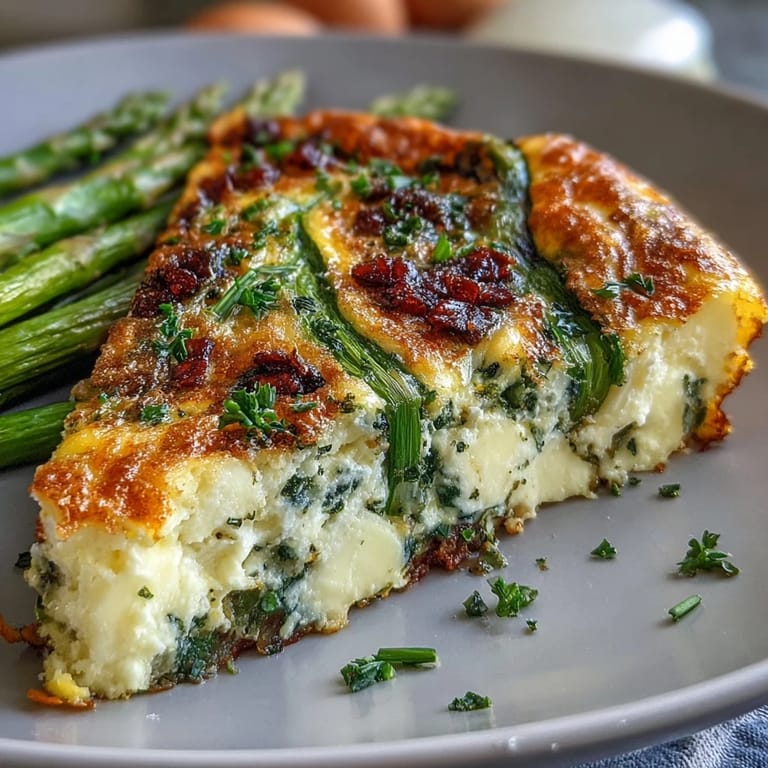 Save to Pinterest
 I learned something that morning with my sister: food tastes better when it doesn't demand all your attention and energy. This frittata teaches you that lesson every time you make it. The vegetables are already soft, the eggs are almost done before they go in the oven, and you're left standing there with time to pour coffee or set the table instead of hovering and fussing.
Why Spring Vegetables Matter Here
Asparagus and spinach aren't just what makes this taste good—they're what makes it feel seasonal and alive. When I use vegetables that are actually in season, everything tastes sharper and more vibrant, like the frittata is somehow capturing a moment in time. You can taste the difference immediately, and honestly, it's worth seeking out farmers market asparagus in spring instead of the pale, tired stuff from the grocery store in December.
Temperature and Texture Secrets
I used to always serve frittata straight from the oven when it was piping hot, but I've learned it's actually better at room temperature or even slightly cool. At room temperature, the goat cheese becomes more pronounced, the eggs have a cleaner, less eggy taste, and the whole thing holds together better when you slice it. Temperature changes everything about how flavors come through.
Make It Your Own
This recipe is truly just a starting point—the frame is always eggs, vegetables, and cheese, but what goes inside depends on what's in your kitchen and what you're craving. I've made it with leeks and tarragon in late winter, with peas and mint in early summer, and it's never once disappointed. The technique stays the same, but the story changes every time.
- Substitute the goat cheese with crumbled feta or creamy ricotta if that's what you have on hand.
- Swap asparagus for tender green beans, broccoli rabe, or even roasted mushrooms if you prefer.
- Fresh herbs are flexible too—basil, tarragon, or parsley all bring their own personality to the dish.
 Save to Pinterest
 This frittata has become my answer to the question of what to cook when I want something that tastes impressive but doesn't require any real skill or stress. Every time I make it, I think of my sister and that morning, and I smile.
Recipe FAQs
- → How do you keep the frittata fluffy?
Whisk the eggs gently with milk and avoid overcooking. Cooking on low heat before baking allows the center to set without drying out, keeping it light and tender.
- → Can other vegetables be added?
Yes, peas, leeks, or other spring vegetables complement asparagus well and add variety to the dish.
- → What cheeses work besides goat cheese?
Feta or ricotta can be used as substitutes for goat cheese, offering different flavor profiles while maintaining creaminess.
- → How should the frittata be served?
Serve warm or at room temperature. It pairs nicely with a crisp white wine or sparkling rosé and a green salad or crusty bread.
- → Is this dish suitable for gluten-free diets?
Yes, as written it contains no gluten, but check cheese and milk labels for cross-contamination if highly sensitive.