 Save to Pinterest
 The first time I really understood brunch was when my friend Sarah invited me to her kitchen on a lazy Sunday morning, and she casually mentioned making Eggs Benedict like it was no big deal. Watching her move between the stove and counter with such ease, I realized this dish wasn't fancy because of complicated techniques—it was elegant because each element, when done right, tastes like it was made just for you. That hollandaise sauce, silky and rich, changed how I thought about breakfast entirely.
I made this for my partner on our first morning in the new apartment, and there was something about the steam rising from the poaching water, the butter smell filling that unfamiliar kitchen, that suddenly made it feel like home. We sat at the counter eating in comfortable silence, and I realized food does that—it transforms a moment from ordinary into something you remember.
Ingredients
- Egg yolks (3): The foundation of your hollandaise; they need to be at room temperature or they'll seize up on you, which I learned the hard way on a Saturday morning.
- Lemon juice (1 tablespoon, freshly squeezed): Fresh is non-negotiable here—bottled juice changes the entire flavor profile, making it taste flat and one-dimensional.
- Unsalted butter, melted and warm (1/2 cup): The temperature matters as much as the quality; too hot and you'll scramble those yolks instantly.
- Dijon mustard (1/2 teaspoon, optional): A tiny amount adds sophistication without being detectable, just a whisper of complexity.
- Cayenne pepper (pinch): This gives the sauce a gentle warmth that rounds out the richness beautifully.
- Salt: Taste as you go; hollandaise needs proper seasoning to sing.
- Large eggs (4): Use the freshest eggs you can find—older eggs don't poach as cleanly because the whites spread too thin.
- English muffins (2, split and toasted): Those nooks and crannies aren't just for texture; they catch the hollandaise sauce and keep every bite interesting.
- Canadian bacon (4 slices): It's meatier and less greasy than regular bacon, which keeps the dish feeling balanced and refined.
- White vinegar (1 tablespoon): This helps the egg whites set faster, making poaching less of a guessing game.
- Butter, for toasting (optional): If you use it, your muffins will have this golden, almost nutty flavor that's impossible to resist.
- Chopped chives or parsley: The final garnish that adds color and a fresh, bright note to cut through the richness.
Tired of Takeout? 🥡
Get 10 meals you can make faster than delivery arrives. Seriously.
One email. No spam. Unsubscribe anytime.
Instructions
- Build your hollandaise over gentle heat:
- Set a heatproof bowl over simmering water—not touching the water—and whisk your room-temperature egg yolks with lemon juice until they pale and double in volume, about 2–3 minutes. This step is where patience pays off; rushing it means breaking the emulsion.
- Stream in the butter like you're feeding a temperamental flame:
- Pour the warm melted butter in slowly, whisking constantly, until your sauce transforms into something luxuriously thick and creamy. If it starts looking broken or too thin, whisk in a teaspoon of cool water to bring it back together.
- Season with purpose:
- Add mustard if you want that subtle sophistication, a pinch of cayenne for warmth, and salt until it tastes right to you. Remove from heat and let it sit in a warm spot, stirring occasionally.
- Toast your English muffins until they're golden and crisp:
- A light butter on each side before toasting makes them taste almost indulgent, with those interior nooks turning warm and slightly crunchy. Set them somewhere safe while you work on the rest.
- Warm the Canadian bacon just enough to matter:
- A minute or so per side in a hot skillet brings out a light browning and warms it through without drying it out. You're looking for it to smell a little smoky and charred at the edges.
- Poach your eggs like you're cradling something delicate:
- Bring water with a splash of vinegar to a gentle simmer—you want tiny bubbles, not a rolling boil—then crack each egg into a small bowl first. Swirl the water into a vortex and slide the egg in gently, and let it sit for 3–4 minutes until the whites are set but the yolk still jiggles slightly when you nudge it.
- Plate it with intention:
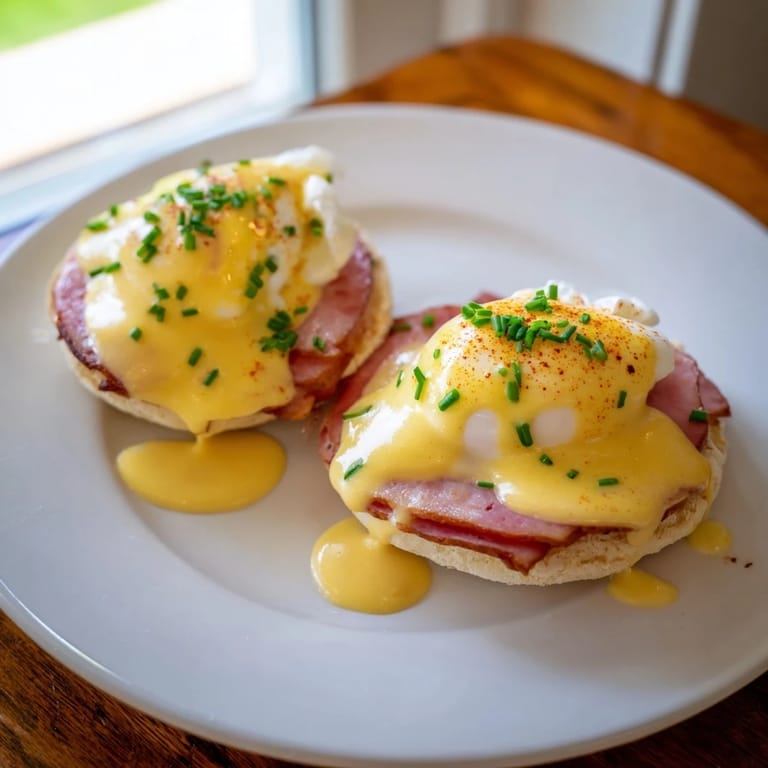
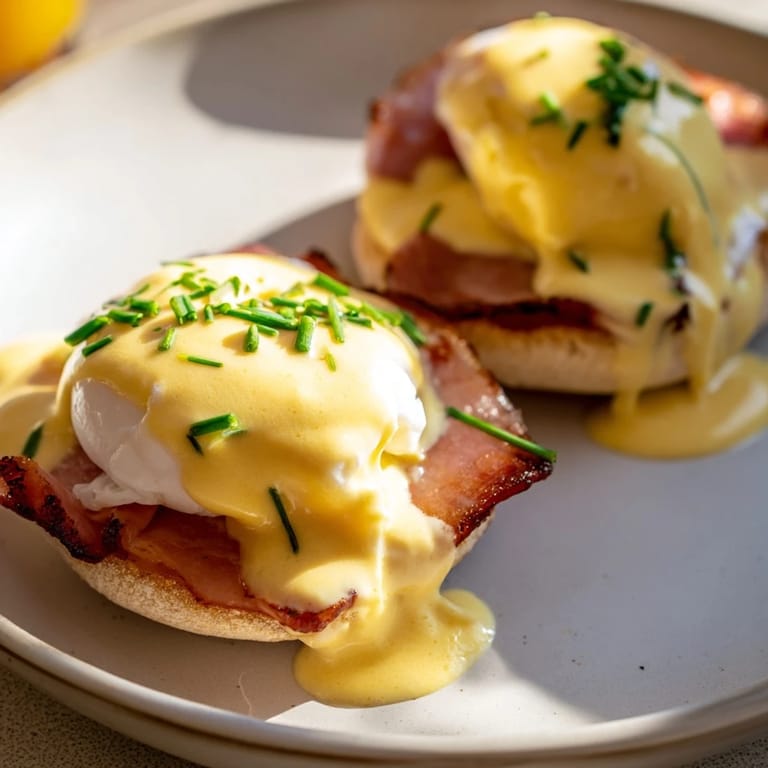
- Muffin half down, Canadian bacon draped on top, then your poached egg, and finally a generous spoon of warm hollandaise cascading over everything. Finish with a scatter of fresh chives or parsley if you have them.
 Save to Pinterest
 There's a quiet magic in the moment when you plate this dish—when the warm hollandaise hits the cold poached egg and starts to flow, creating these little rivers of gold over the muffin. That's when you know you've done something right, and people notice.
The Art of Poaching Without Panic
The secret to poaching eggs is accepting that they won't be perfect, and that's completely fine. I used to stress about creating the ideal vortex and getting the whites to form a tight little package, but honestly, even wonky poached eggs taste incredible under hollandaise sauce. The vinegar in the water is your friend here—it makes the whites set faster, so you have more wiggle room. Start with the gentlest simmer you can manage, get the water moving in a soft spiral, and let the egg slide in without any drama. If you mess up the first one, you've got three more chances to find your rhythm.
Why Hollandaise Feels Intimidating But Isn't
Hollandaise has a reputation for being finicky, and sure, I've broken it a few times by pouring too fast or using butter that was too hot. But here's the truth: it's just eggs and butter in a relationship, and like most relationships, it works when you go slow and pay attention. The double boiler isn't actually complicated—it's just heat protection. Your egg yolks need to thicken without scrambling, so you're creating a gentle, indirect warmth. Once you've done it once, you'll feel the confidence kick in, and you'll understand why this sauce shows up on so many restaurant menus. It's the kind of technique that feels like a small superpower once it clicks.
Variations That Keep This Dish Fresh
The bones of this recipe are strong enough to handle all sorts of creative interpretations. I've made it with smoked salmon instead of Canadian bacon on mornings when I wanted something lighter, and with sautéed spinach on nights when I had extra greens hanging around. Avocado slices work beautifully too, especially if you add a squeeze of lime juice to the hollandaise. The point is that once you master the technique, you can play with the components and make it yours.
- Try a squeeze of lime juice in the hollandaise if you use smoked salmon—it brightens the whole thing beautifully.
- Sautéed spinach (known as Eggs Florentine) absorbs the hollandaise sauce like a sponge and tastes deeply satisfying.
- Make extra hollandaise because you'll find yourself spooning it onto everything before the morning is over.
 Save to Pinterest
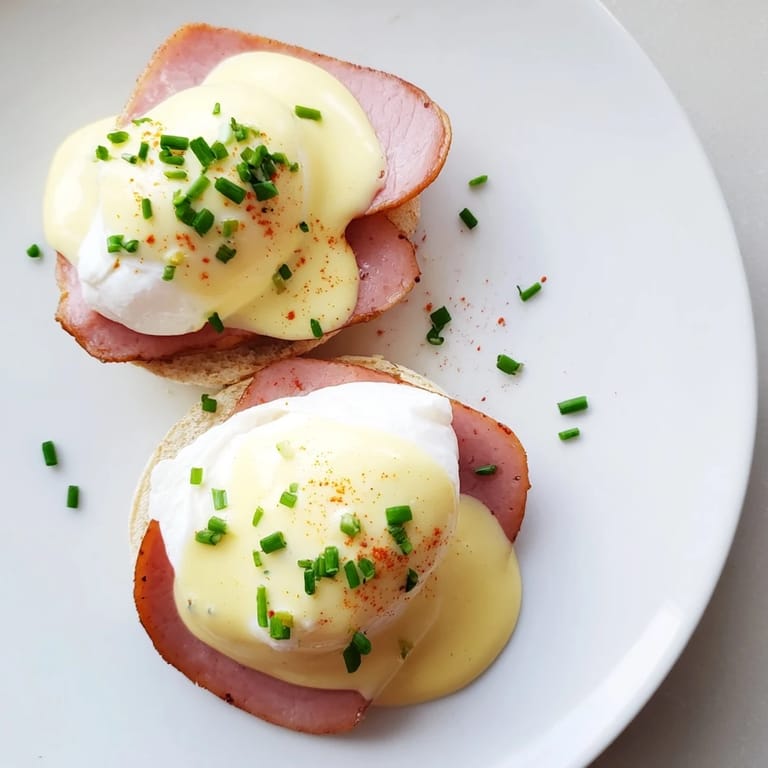
 Eggs Benedict is the kind of breakfast that makes you feel like you're treating yourself, even though you're doing all the work. Once you've made it a few times, it becomes your secret weapon for weekend mornings.
Recipe FAQs
- → How do I poach eggs perfectly?
Use gently simmering water with a splash of vinegar to help the whites set. Slide eggs in one at a time and poach for 3-4 minutes for soft yolks.
- → Can I substitute Canadian bacon?
Yes, smoked salmon or sautéed spinach provide delicious alternatives for different dietary preferences.
- → How is hollandaise sauce made smooth?
Whisk egg yolks and lemon juice over gentle heat, slowly adding warm melted butter to achieve a creamy, thick consistency without curdling.
- → What’s the best bread for this dish?
Toasted English muffins are traditional, offering a sturdy base with a slightly crisp texture that holds the toppings well.
- → Can I prepare parts in advance?
Yes, hollandaise sauce can be kept warm without overheating, and muffins can be toasted shortly before serving.