 Save to Pinterest
 There's a particular Wednesday evening I can't forget—the kind where I'd overcommitted myself and had exactly thirty minutes to feed four hungry people. My neighbor had just dropped off the most beautiful bunch of broccoli from her garden, and I had beef thawing on the counter. That's when this bowl came together, not from a recipe book, but from pure kitchen necessity and the beautiful simplicity of flavors that just work. It's become my go-to when life gets loud and the kitchen needs to be quick and reliable.
I made this for my sister's first week in her new apartment, when her kitchen was still mostly empty boxes and ambition. She watched me slice the beef, questioned the cornstarch ("is that really necessary?"), and by the time that soy-ginger aroma hit the air, she understood. We sat cross-legged on her living room floor with bowls balanced on our laps, and it felt less like dinner and more like the beginning of something new in her space.
Ingredients
- Flank steak or sirloin, thinly sliced against the grain: Slicing against the grain is what makes the beef tender enough to break with a fork—this single decision changes everything, so take thirty seconds with your knife to get it right.
- Soy sauce (for marinade and sauce): The backbone of every element here, bringing umami depth that makes people taste something familiar but can't quite name it.
- Cornstarch: This does two jobs—it helps the beef stay tender and gives the sauce that silky, glossy finish that makes it cling beautifully to every grain of rice.
- Rice vinegar: A whisper of acidity that prevents the marinade from feeling one-dimensional and keeps your palate interested.
- Sesame oil: Just a teaspoon, but it carries a toasted, nutty warmth that's impossible to fake with anything else.
- Oyster sauce: The secret ingredient that adds complexity without announcing itself—use good quality or the whole thing tastes flat.
- Honey or brown sugar: A small sweetness that balances the salt and creates that addictive, restaurant-quality depth.
- Fresh ginger and minced garlic: These two together create the aromatic foundation that your nose will detect before your mouth even touches the food.
- Beef or chicken broth: Adds body to the sauce and prevents it from becoming cloyingly thick or one-note salty.
- Broccoli florets: Steam them just until tender—overcooked broccoli becomes watery and gray, which nobody deserves.
- Jasmine or long-grain rice: Jasmine rice absorbs the sauce like a sponge and tastes slightly floral, while long-grain stays separate and clean.
- Green onions and sesame seeds: These aren't decoration—they're the textural and flavor contrast that makes each bite interesting.
Tired of Takeout? 🥡
Get 10 meals you can make faster than delivery arrives. Seriously.
One email. No spam. Unsubscribe anytime.
Instructions
- Prepare the beef marinade:
- Combine your sliced beef with soy sauce, cornstarch, rice vinegar, and sesame oil in a bowl, turning the meat gently until everything is coated. Let it sit for ten minutes—this brief rest allows the marinade to work into the fibers and season from the inside.
- Build your sauce:
- Whisk together soy sauce, oyster sauce, honey, ginger, garlic, and broth in a separate bowl. Keep the cornstarch slurry separate for now; you'll add it at the last moment when you want the sauce to thicken into something glossy and clingy.
- Steam the broccoli:
- Get your broccoli florets into a steamer basket over boiling water for just three to four minutes—you want them still snappy with a slight resistance when you bite down. Rinse them immediately under cold water to stop the cooking and set that brilliant green color in place.
- Sear the beef quickly:
- Heat your skillet or wok until it's smoking hot, then add the marinated beef in a single layer and resist the urge to stir for the first minute or two. You want a golden-brown crust on each piece, which happens only if you leave it alone—this takes about one to two minutes per side.
- Create the sauce:
- Pour your sauce mixture into the same pan where the beef lived, bringing it to a gentle simmer. The bottom of the pan will be coated in all those flavorful beef bits, and they'll dissolve into your sauce like liquid gold.
- Thicken and combine:
- Stir in your cornstarch slurry and watch the sauce transform from thin and watery to silky and luxurious in about one to two minutes. Return the beef and add the broccoli, tossing everything together for just a moment until the heat brings all three elements together.
- Serve and garnish:
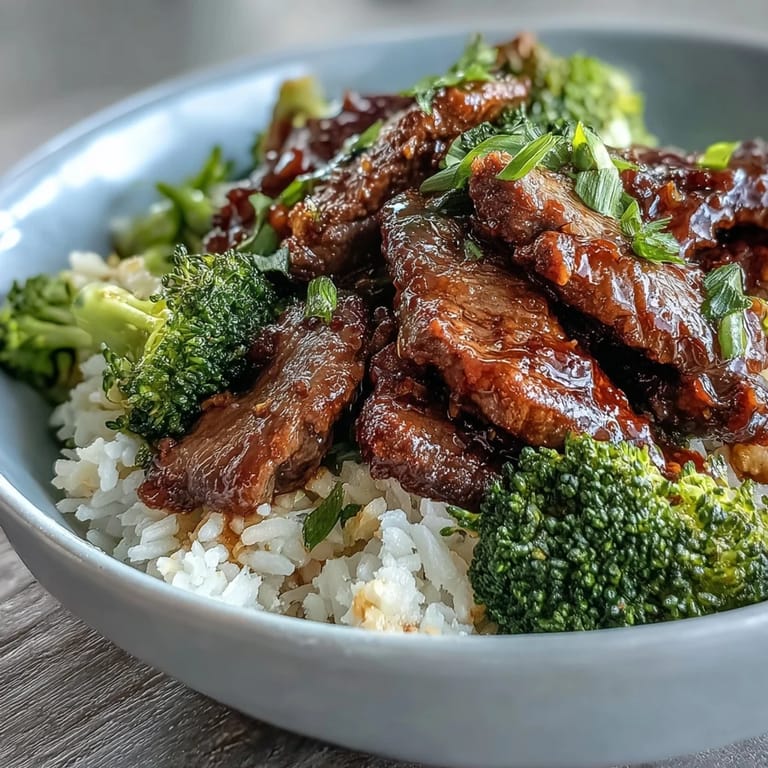
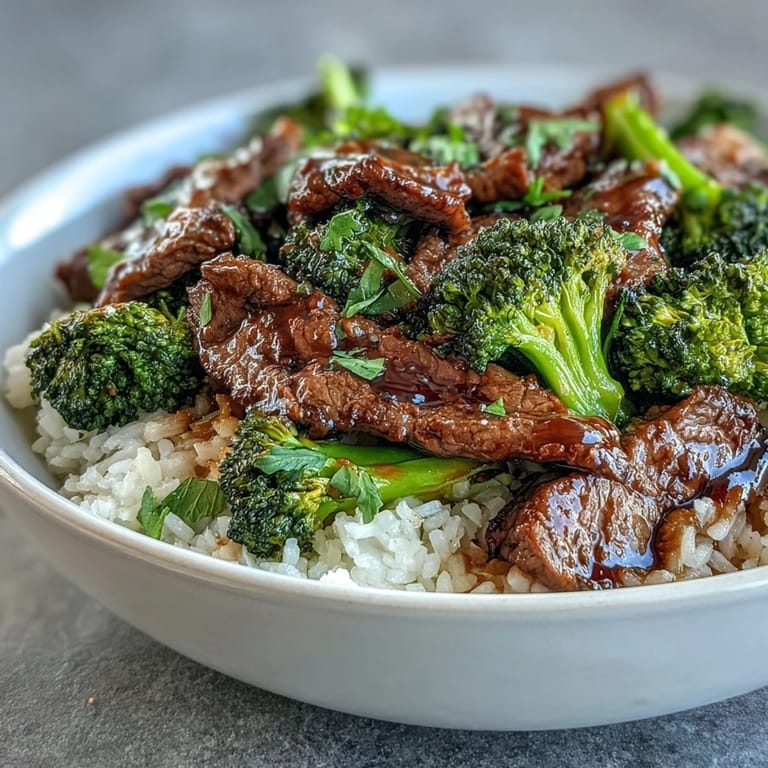
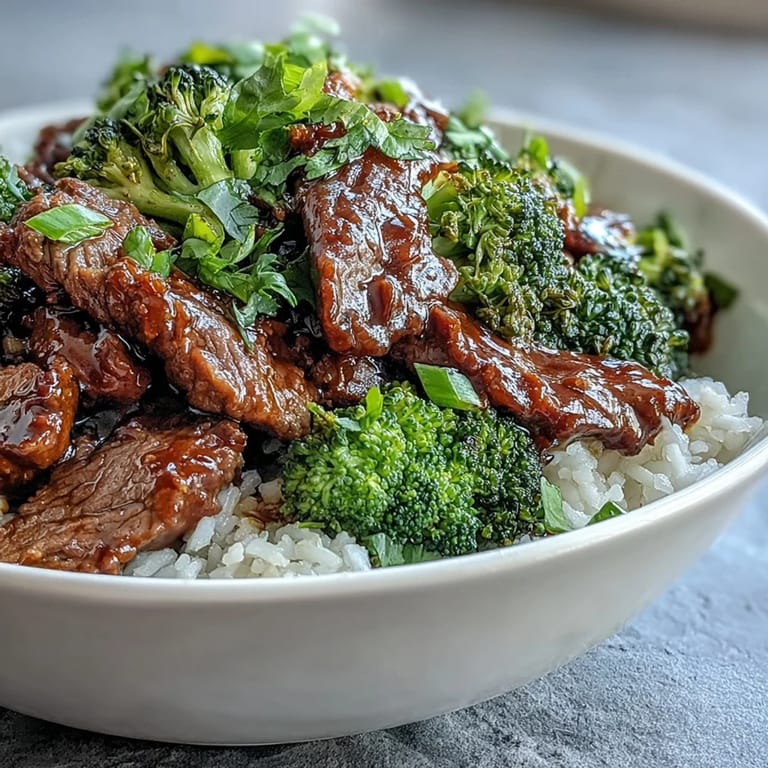
- Pile your rice into bowls, top with the beef and broccoli mixture, and scatter green onions and sesame seeds across the top. Those garnishes aren't just pretty—they add a fresh bite and subtle nuttiness that finishes the dish perfectly.
 Save to Pinterest
 This bowl has become my answer to "what should we eat?" on nights when everyone's tired but nobody wants to compromise on flavor. There's something quietly perfect about a dish that tastes like you spent hours cooking when you've really spent thirty minutes, and somehow that simplicity makes it taste even better.
The Science Behind the Tenderness
That cornstarch in the marinade isn't just a thickening agent—it's actually a tenderizer that creates a protective barrier around the beef as it cooks. The starch undergoes a chemical reaction under high heat, essentially steaming the meat from the inside out while the outside gets a beautiful sear. I learned this the hard way after years of making tougher versions without it, and once I understood what was happening, every piece of beef came out silky and yielding.
Why This Sauce Tastes Like Restaurant Food
The magic is in the layering of three different salty umami elements—soy sauce, oyster sauce, and broth—combined with bright ginger and garlic for aromatic lift and a touch of honey for balance. Restaurant cooks understand that salt isn't the enemy; it's salt combined with sweetness, acidity, and savory depth that creates cravings. When you build a sauce this way instead of pouring bottled teriyaki over everything, you get something that tastes complex and intentional, like someone actually cared about the food.
Variations and Personal Touches
While this recipe is complete as written, I've learned that the best versions are the ones you adjust for yourself. Some nights I add a handful of snap peas or red bell peppers for color and crunch, other times I use chicken or even firm tofu if that's what's in the house. The structure of the recipe—marinate, sear, sauce, combine—stays the same, but the specifics belong to you and your kitchen and what you're hungry for.
- For a gluten-free version, swap tamari for soy sauce and use gluten-free oyster sauce, which tastes nearly identical.
- Sriracha or a small pinch of white pepper added at the very end gives the sauce a subtle heat that's not obvious but keeps people coming back.
- Double the sauce recipe if you like plenty of it pooling in the bottom of your bowl, because who would blame you.
 Save to Pinterest
 This bowl has fed tired friends, lazy weeknights, and the occasional moment when I just wanted something that tasted like love without the fuss. It's the kind of dish that proves simple ingredients in the right combination can taste like you're eating something far more complicated than you actually made.
Recipe FAQs
- → What cut of beef works best for this bowl?
Flank steak or sirloin are ideal choices. Slice the beef thinly against the grain to ensure tenderness. The marinade with cornstarch helps create a velvety texture while cooking.
- → Can I make this gluten-free?
Yes, substitute regular soy sauce with tamari and use gluten-free oyster sauce. The rest of the ingredients are naturally gluten-free, making this an easy adaptation.
- → How do I prevent the beef from becoming tough?
Slice against the grain, marinate briefly with cornstarch, and cook quickly over high heat. Avoid overcrowding the pan and don't overcook—the beef should be browned but still tender.
- → Can I use frozen broccoli instead of fresh?
Fresh broccoli works best for maintaining crisp texture, but frozen can be used in a pinch. Thaw and pat dry before steaming, and reduce steaming time slightly to prevent mushiness.
- → What other proteins can I substitute?
Chicken breast or thigh slices work well with the same marinade and cooking time. For a vegetarian option, use extra-firm tofu pressed and cubed, or increase the broccoli and add snap peas or bell peppers.
- → How long does the sauce keep in the refrigerator?
The sauce mixture can be prepared up to 3 days in advance and stored in an airtight container. If made ahead, whisk well before adding to the pan as the cornstarch may settle.