 Save to Pinterest
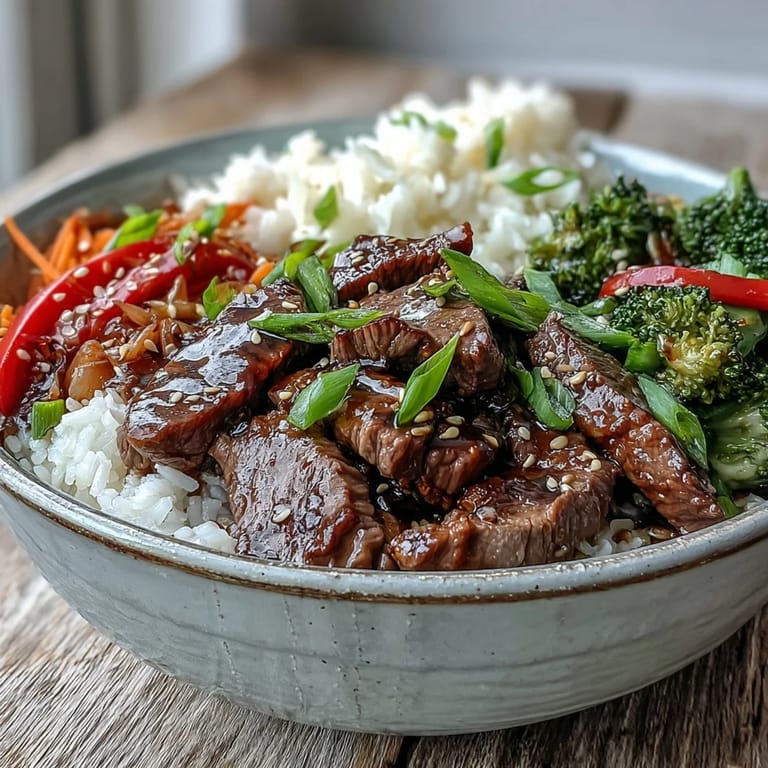
 My neighbor brought over a teriyaki beef bowl one evening, and I watched steam rise from the rice as she set it down on my kitchen counter. The beef glistened under the kitchen light, coated in that gorgeous mahogany glaze, and before she even explained what was in it, I was already mentally mapping out how to recreate it. What struck me most wasn't just how it tasted, but how simple the technique actually was, once someone showed you the way.
I made this for my partner on a random Tuesday night when we both felt burnt out from work, and something shifted in that moment. We sat at the table without our phones, and there was this quiet contentment in how the warm bowl felt in our hands, how the textures all came together with each bite. It became the dish I'd reach for whenever I needed to remind myself that cooking doesn't have to be complicated to feel like an act of care.
Ingredients
- Flank steak or sirloin, thinly sliced (500 g): The cut matters here because thin slices cook fast and absorb the sauce beautifully, turning tender in just minutes if you don't overcook them.
- Cornstarch: A light coating on the beef helps it brown quickly and creates a slight texture that holds the sauce, so don't skip this step even though it seems minor.
- Vegetable oil: Use something with a high smoke point like canola or peanut oil so your skillet stays hot enough to sear properly.
- Soy sauce (80 ml): The backbone of the whole sauce, and honestly, quality matters here because it's doing most of the flavor work.
- Mirin (60 ml): This sweet rice wine is what makes teriyaki actually teriyaki, adding a subtle depth that honey alone can't quite capture.
- Honey or brown sugar (2 tbsp): Your choice here, though I prefer honey because it dissolves more smoothly into the sauce.
- Rice vinegar (2 tbsp): The brightness that keeps the sauce from becoming cloying, cutting through all that sweetness with a gentle tang.
- Garlic and ginger (fresh, minced and grated): These aren't optional flavor boosters, they're essential players that make the sauce taste alive instead of flat.
- Cornstarch slurry (1 tbsp mixed with 2 tbsp water): The secret to glossy, clingy sauce that coats every strand of beef and vegetable.
- Carrot, bell pepper, broccoli, spring onions: Choose vegetables that have some texture and won't turn mushy in the few minutes they spend in the wok, keeping the whole dish feeling fresh.
- Sesame seeds (for garnish): The final touch that adds nutty aroma and reminds you this dish is intentional, not rushed.
- Cooked rice (2 cups): Make this while your sauce simmers and your beef rests, timing everything so it's all warm when you plate.
Tired of Takeout? 🥡
Get 10 meals you can make faster than delivery arrives. Seriously.
One email. No spam. Unsubscribe anytime.
Instructions
- Build your sauce first:
- In a small saucepan over medium heat, whisk together soy sauce, mirin, honey, rice vinegar, minced garlic, and grated ginger. Let it come to a gentle simmer and breathe in that incredible aroma, then slowly drizzle in your cornstarch slurry while whisking constantly to avoid lumps. Simmer for just 2 to 3 minutes until it thickens enough to coat the back of a spoon, then set it aside and let it cool slightly.
- Prepare your beef for the pan:
- Toss your thinly sliced beef with cornstarch in a bowl, making sure each piece gets a light coating, then let it sit for just a minute so the starch can adhere properly. This little step makes all the difference in how quickly and evenly it browns.
- Sear the beef until just done:
- Heat your vegetable oil in a large skillet or wok over high heat until it shimmers and moves easily around the pan. Working quickly, add the beef in a single layer and let it sit undisturbed for about a minute so it develops a golden crust, then toss and stir for another minute or two until cooked through. Transfer it to a clean plate and don't worry if it looks slightly pink inside, it'll finish cooking when the sauce comes back together.
- Build flavor with the vegetables:
- In that same skillet with all the beef drippings still clinging to the bottom, add your carrots, bell pepper, and broccoli florets. Stir-fry for 3 to 4 minutes over high heat, listening for that constant sizzle and watching the colors brighten as they cook. You want them tender but still with a bit of snap when you bite into them.
- Bring it all together:
- Return the beef to the skillet, pour that glossy sauce over everything, and toss gently but thoroughly so every piece gets coated in that mahogany glaze. Heat it all through for about a minute, then taste and adjust the seasoning if you need to.
- Serve with intention:
- Divide your warm rice among bowls, then top with the beef and vegetable mixture, making sure each bowl gets plenty of sauce. Scatter sliced spring onions and sesame seeds over the top, and serve immediately while everything is still steaming.
 Save to Pinterest
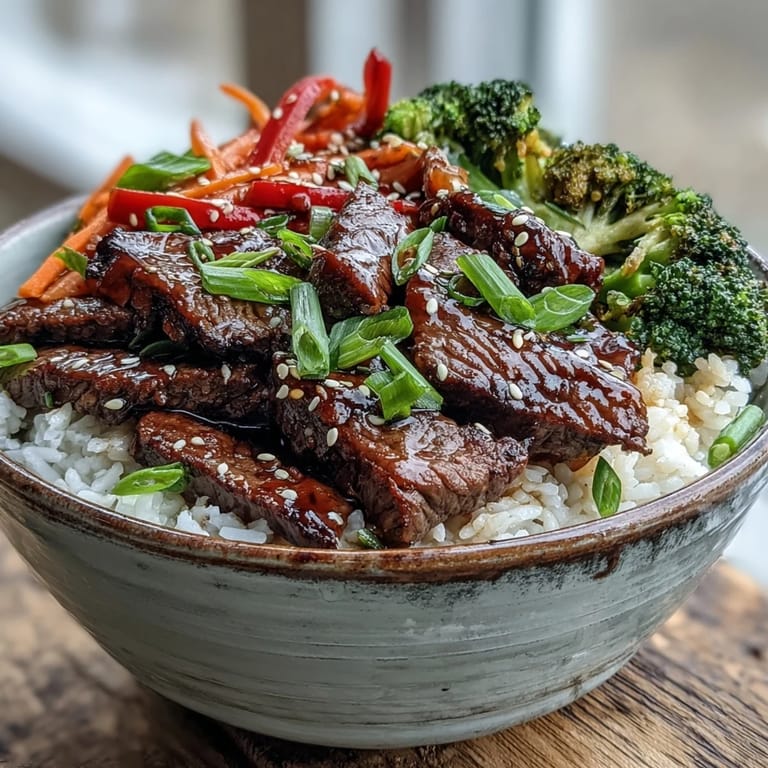
 There's a moment right when you pour that thickened sauce over the hot beef and vegetables where everything glistens under the kitchen light, and you know you've done something right. My kitchen smelled like garlic and ginger steam for hours afterward, and that's when this dish stopped being just dinner and became something I wanted to cook again and again.
Why High Heat Matters Here
I learned this the hard way by cooking the beef on medium heat once, watching it steam sadly instead of sear. The high heat creates a quick crust that seals in the juices and gives you those little caramelized edges that make every bite more interesting, so resist the urge to turn down the temperature even when it gets loud and dramatic in the pan.
Making It Your Own
This recipe is remarkably flexible without losing its character, which is actually why I love making it. You can swap the beef for chicken thighs, which stay juicier and take the sauce beautifully, or crumbled tofu if you're cooking for vegetarian friends and want something that feels equally satisfying.
Small Details That Shift Everything
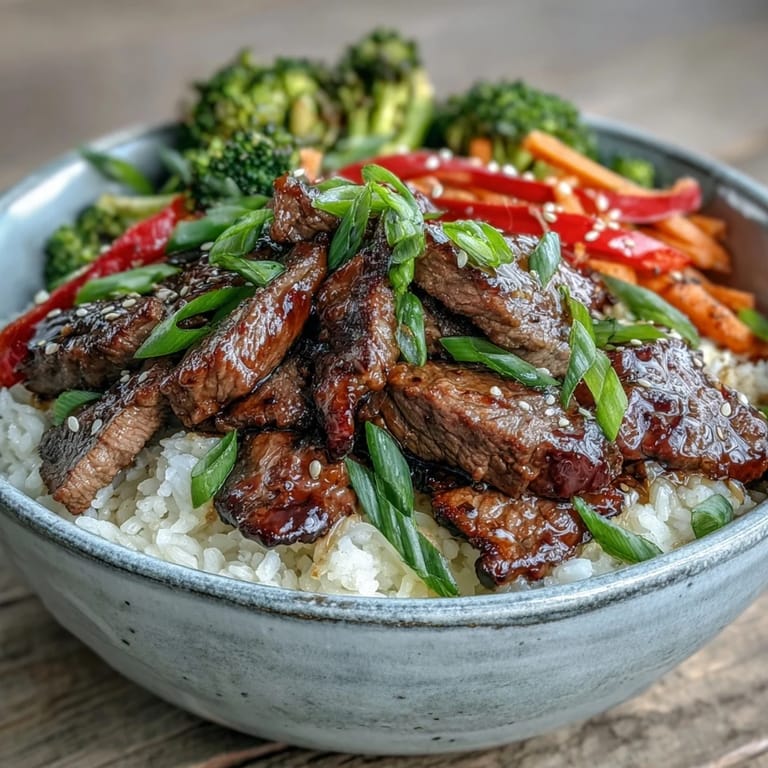
The spring onion garnish isn't just decoration, it adds a fresh bite that cuts through the richness and reminds your palate what you're eating. Sesame seeds do something similar, adding warmth and aroma that transforms a good bowl into one you remember hours later.
- Toast your sesame seeds in a dry skillet for just 30 seconds before garnishing if you want to deepen their nutty flavor.
- If you're making this ahead, keep the sauce separate and reheat gently so it stays glossy instead of becoming thick and gluey.
- Brown rice works wonderfully here and adds more texture, though it takes longer to cook so plan accordingly.
 Save to Pinterest
 This bowl has become my answer to the question of what to make when someone needs comfort without ceremony. It's proof that restaurant-quality food lives closer to our kitchens than we usually believe.
Recipe FAQs
- → What cut of beef works best for teriyaki bowls?
Flank steak or sirloin are excellent choices because they're lean and tender when thinly sliced against the grain. The quick stir-fry cooking method keeps the beef moist while developing a nice sear.
- → Can I make the teriyaki sauce ahead of time?
Absolutely. The teriyaki sauce can be prepared up to a week in advance and stored in an airtight container in the refrigerator. Reheat gently before tossing with the beef.
- → Is this dish gluten-free?
The traditional version contains gluten from soy sauce. To make it gluten-free, simply substitute tamari or certified gluten-free soy sauce in the teriyaki glaze.
- → What vegetables can I add to customize?
Snap peas, edamame, mushrooms, bok choy, or zucchini all work beautifully. Keep pieces uniform in size for even cooking and maintain the vegetables' crisp texture.
- → How do I prevent the beef from becoming tough?
Coating the beef in cornstarch before cooking helps retain moisture. Cook over high heat for just 2-3 minutes to avoid overcooking, and always slice thinly against the grain.
- → Can I use brown rice instead of white?
Brown rice is a nutritious alternative that adds nutty flavor and extra fiber. Just adjust cooking time accordingly, as brown rice typically takes longer to prepare than white varieties.