 Save to Pinterest
 There's something about the smell of tomatoes hitting a hot oven that makes everything feel intentional. Years ago, I was in a rush, throwing together whatever was in my crisper drawer, and somehow ended up with this soup—golden, silky, nothing like the thin watery versions I'd made before. The roasting changed everything. Now whenever I have good tomatoes and an afternoon to spare, this is what I reach for.
I made this for my sister's book club last October, and it was the moment everyone stopped talking mid-sentence to actually taste what they were eating. She's the kind of cook who intimidates me, but when she asked for the recipe, something clicked—this soup doesn't need to be complicated to be worth making again.
Ingredients
- Ripe tomatoes, halved (1.5 lbs): The roasting concentrates their sweetness, so pick ones that smell like summer even if they're past their perfect red phase.
- Large onion, quartered: Caramelizing alongside the tomatoes turns it almost translucent and deeply sweet, completely different from raw.
- Garlic cloves, peeled (4): Leave them whole so they don't scorch, and they'll turn mellow and almost nutty as they roast.
- Olive oil (2 tbsp for roasting): Quality matters here since it's not masked by other flavors; good oil makes the difference.
- Salt and freshly ground black pepper: I learned the hard way that pre-ground pepper tastes flat in this soup, so crack it fresh if you can.
- Smoked paprika (½ tsp, optional): This is my secret weapon—it adds a whisper of depth without anyone realizing what's happening.
- Vegetable broth (2 cups): Homemade is lovely, but don't stress if you're using store-bought; the roasted vegetables do most of the flavor work.
- Tomato paste (1 tbsp): This concentrates the tomato essence even further and gives the soup that cozy richness.
- Sugar (1 tsp, optional): Only use this if your tomatoes taste acidic; it's a gentle balance, not a sweetener.
- Heavy cream (½ cup, plus more for garnish): Stir it in at the end off heat so it stays silky and doesn't break.
- Fresh basil (2 tbsp, plus garnish): Add most of it before blending so the flavor blooms, then save some leaves for that final green touch.
- Day-old bread, cubed (2 cups for croutons): Day-old is important because fresh bread turns soggy too quickly; stale bread crisps up beautifully.
- Olive oil for croutons (2 tbsp): A lighter hand here than with soup, just enough to coat and toast.
- Garlic powder, salt, and oregano for croutons: These seasonings stick to the oil-coated bread and toast right into the crust.
Tired of Takeout? 🥡
Get 10 meals you can make faster than delivery arrives. Seriously.
One email. No spam. Unsubscribe anytime.
Instructions
- Heat your oven and prep the vegetables:
- Set the oven to 425°F and arrange your tomato halves cut side up on a baking sheet along with onion pieces and whole garlic cloves. This cut-side-up arrangement matters because the tomatoes release their moisture and caramelize against the heat.
- Season and roast the vegetables:
- Drizzle everything with olive oil and scatter salt, pepper, and smoked paprika over the top. The paprika isn't necessary but it adds a subtle smokiness that makes people ask what you did differently. Roast for 25 to 30 minutes until the tomato edges look almost charred and the onion is soft.
- Toast the croutons:
- While vegetables roast, toss your bread cubes with olive oil and the garlic powder, salt, and oregano mixture. Spread them on another baking sheet and bake for 8 to 10 minutes, shaking halfway through so they color evenly. They should smell amazing and sound crispy when you bite one.
- Build the soup base:
- Scrape the roasted vegetables into a large pot, including any caramelized bits stuck to the pan. Add vegetable broth and tomato paste, then simmer gently for 5 minutes so all those flavors marry together.
- Blend until silky:
- Tear in your fresh basil leaves, then use an immersion blender to puree everything until completely smooth. If you're using a regular blender, work in batches carefully and never fill it more than halfway, then pour the blended soup back into the pot.
- Finish with cream and seasoning:
- Stir in the heavy cream gently so it stays velvety, then taste carefully. Add a tiny pinch of sugar only if the soup tastes sharp or acidic, and adjust salt and pepper to your liking. Keep the heat low and never let it boil once the cream is in.
- Serve with all the good things:
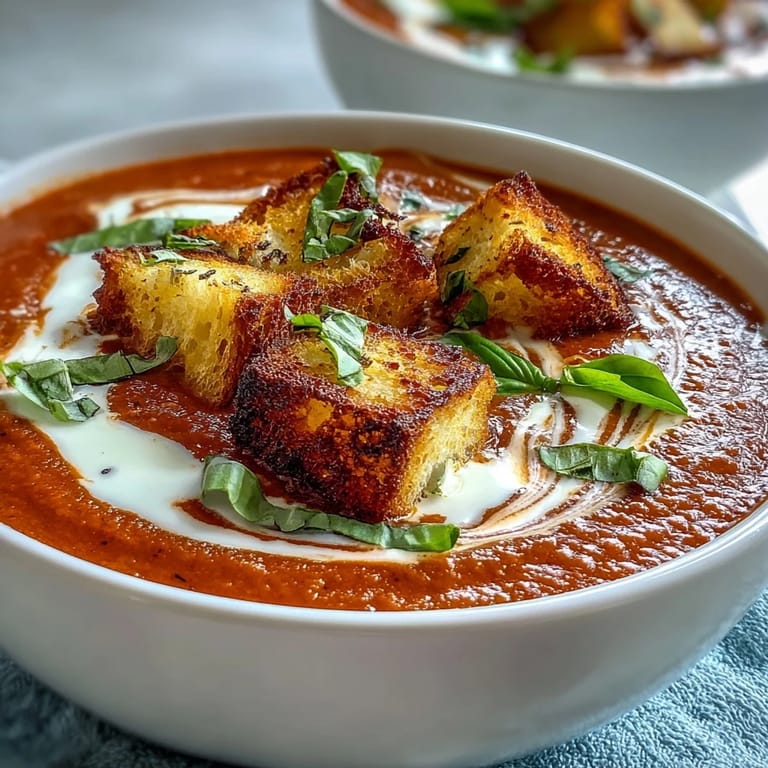
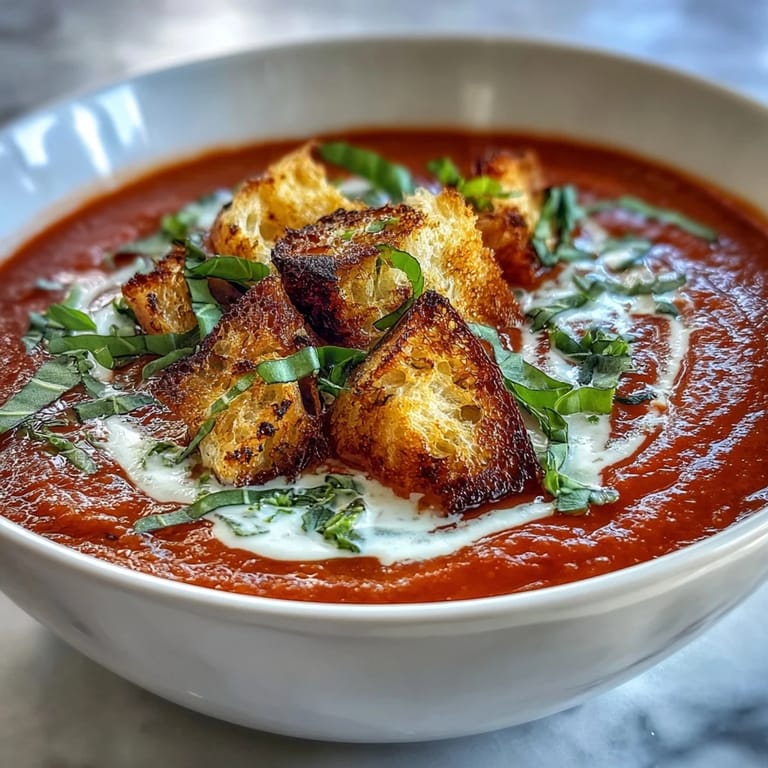
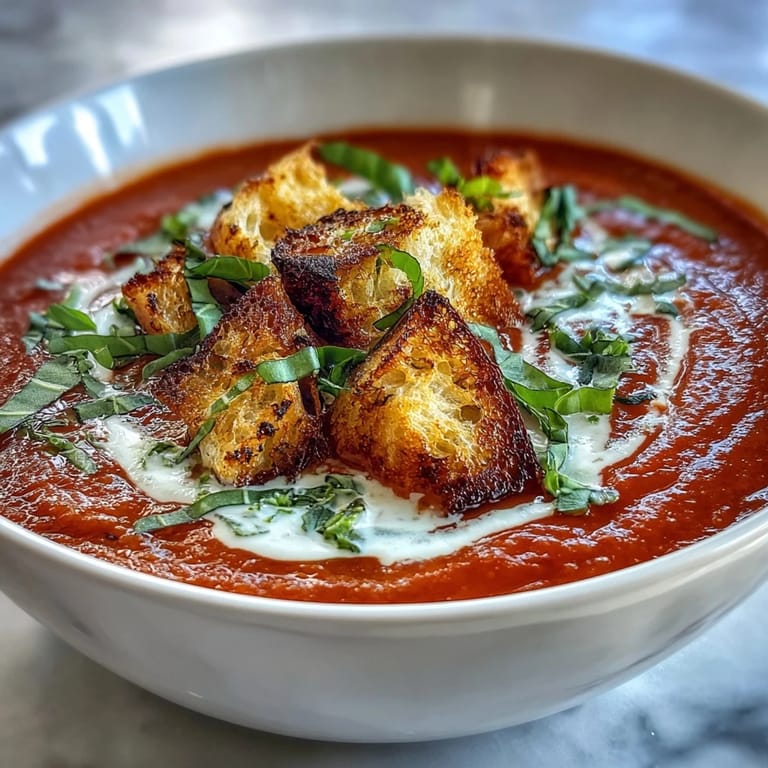
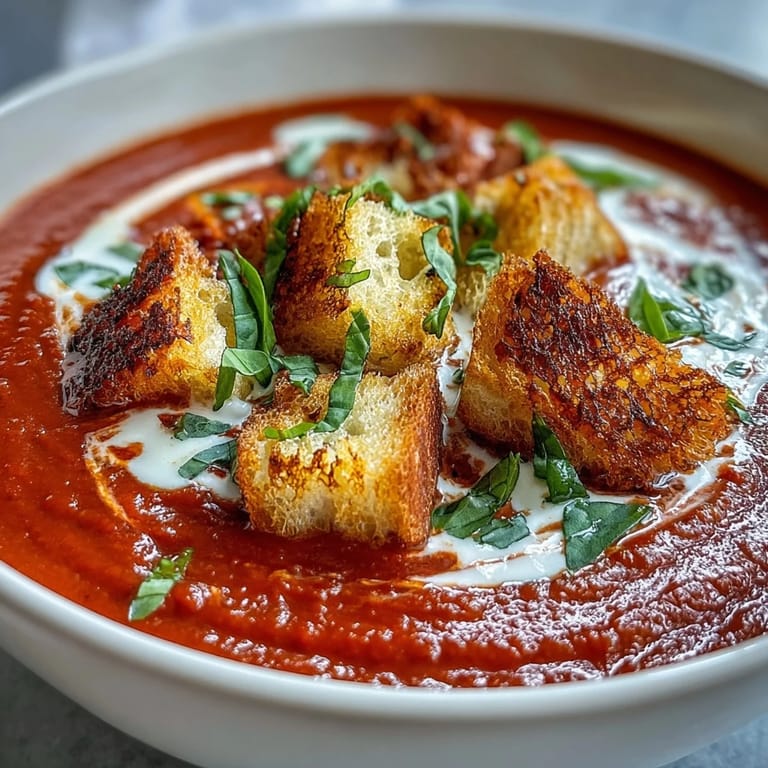
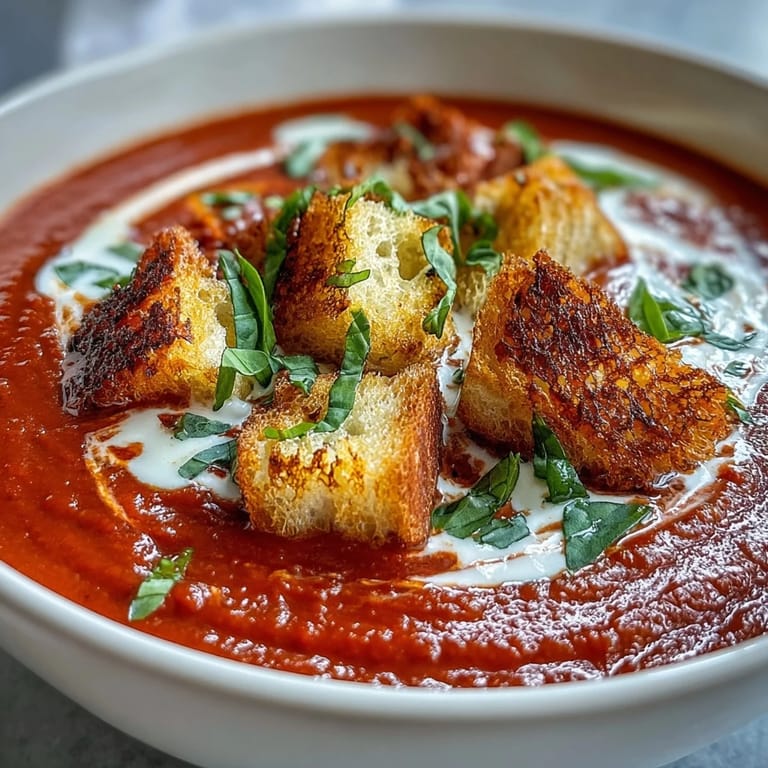
- Ladle into bowls and swirl a bit of extra cream on top in a loose spiral pattern. Pile on warm croutons and scatter fresh basil leaves across everything for color and one more layer of flavor.
 Save to Pinterest
  Save to Pinterest
 My partner came home just as I was ladling bowls, and the whole kitchen was this warm tomato-and-basil cloud. That's when it stopped being a recipe and became a ritual—something I make when I want the house to feel intentional and cared for.
The Magic of Roasting
Roasting vegetables isn't just a technique; it's a flavor amplifier. When tomatoes hit high heat, their water evaporates and their natural sugars concentrate and caramelize. This is why roasted tomato soup tastes nothing like tomato soup made from raw ingredients—the depth comes from that transformation in the oven. The garlic turns almost sweet, the onion becomes translucent and honeyed, and everything mingles into something greater than its parts.
Croutons as Texture and Intention
The croutons aren't just a topping; they're the bridge between silky soup and something you actually want to bite into. There's something satisfying about the contrast—that moment when your spoon breaks through cream and soup and hits a crispy edge. Making them from scratch takes maybe ten minutes total, and the kitchen smells like garlic toast the whole time. Plus, homemade croutons stay crispier longer than store-bought ones because they haven't sat in a bag absorbing moisture.
Adjusting the Soup to Your Taste
This soup is forgiving in the best way. If your tomatoes are more acidic, a small pinch of sugar rounds out the sharpness without making it sweet. If you want it richer, swirl in more cream. If it feels thin, simmer it a bit longer to concentrate the flavors. I've made this with whatever tomatoes I had—fresh summer ones, a mix of fresh and canned in winter, even cherry tomatoes once—and it always works because the roasting and the cream do the real work.
- Taste before you finish so you know exactly what you're adjusting and not overseasoning.
- Remember that smoked paprika and fresh basil are your secret weapons for depth when tomatoes feel flat.
- Make it the day before if you can; the flavors deepen and meld overnight in the refrigerator.
 Save to Pinterest
  Save to Pinterest
 This soup has become my answer to almost every occasion that needs a little warmth and intention. Make it for someone, or just for yourself on a quiet evening—either way, it tastes like you took time to do something kind.
Recipe FAQs
- → Can I make this soup vegan?
Yes, simply replace the heavy cream with coconut cream or your favorite plant-based cream alternative. The flavor and texture will remain rich and satisfying.
- → Can I use canned tomatoes instead of fresh?
Absolutely. You can use a mix of fresh and canned tomatoes for deeper flavor, or use all canned if fresh tomatoes aren't available. Adjust roasting time accordingly.
- → How do I store leftover soup?
Store the soup in an airtight container in the refrigerator for up to 4 days. Keep croutons separate in a sealed container at room temperature to maintain crispness.
- → What can I serve with this soup?
This soup pairs wonderfully with a grilled cheese sandwich for a classic combination. It also works well with crusty bread, a simple green salad, or as a starter before a main course.
- → Can I freeze this soup?
Yes, this soup freezes well for up to 3 months. Allow it to cool completely, then store in freezer-safe containers. Thaw overnight in the refrigerator and reheat gently on the stovetop.
- → Why add sugar to tomato soup?
A small amount of sugar helps balance the natural acidity of tomatoes, creating a more rounded flavor. Taste first and add only if needed, as sweetness varies by tomato variety.