 Save to Pinterest
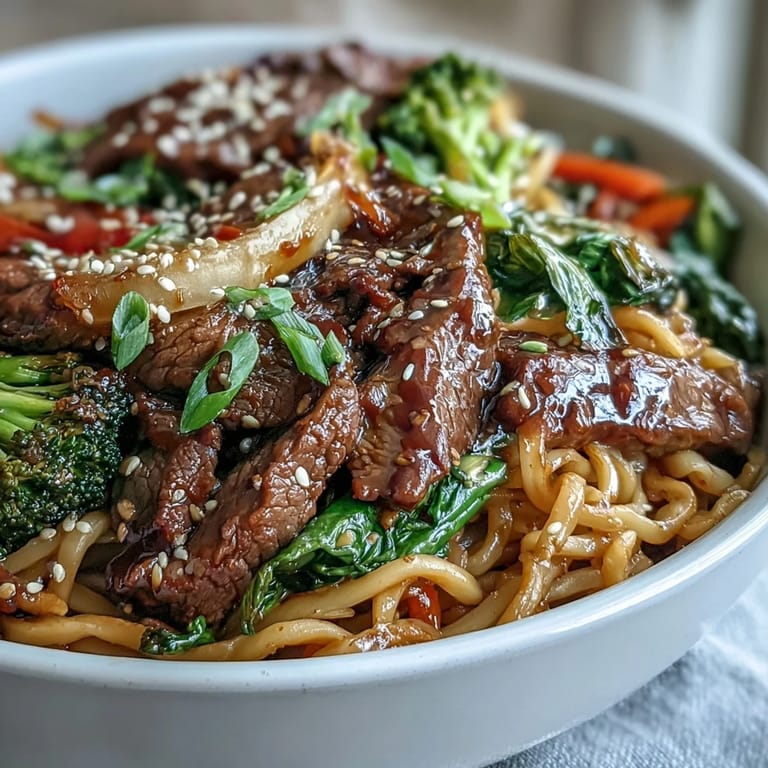
 My neighbor knocked on my door one Thursday evening holding a takeout container and asked if I'd ever tried Korean beef noodles. The smell alone—sweet, savory, and laced with sesame—made my stomach growl. She told me it was easier to make than it looked, and by the next weekend I had flank steak thawing on my counter and a wok heating on the stove. The first batch wasn't perfect; I overcooked the noodles and they clumped together like a rice brick. But the flavors were so good I didn't care, and by the third attempt I'd figured out the timing.
I made this for my brother's birthday dinner last spring, doubling the recipe and piling it into a big serving bowl in the center of the table. He reached for seconds before he'd even finished his first plate, and my mom kept asking what was in the sauce. I told her it was just soy sauce, brown sugar, and sesame oil, and she looked at me like I was hiding something. Sometimes the simplest combinations are the ones that surprise people the most.
Ingredients
- Rice noodles: They turn silky and slippery when cooked, soaking up the sauce without getting mushy if you don't overcook them.
- Flank steak: Slicing it thin against the grain keeps it tender and lets it sear quickly in a hot pan, developing those crispy, caramelized edges.
- Broccoli florets: They add a satisfying crunch and soak up the garlic and ginger as they stir-fry, turning sweet and slightly charred.
- Bell pepper: Red or yellow peppers bring a pop of color and a mild sweetness that balances the salty soy sauce.
- Carrot: Julienned carrots cook fast and add a gentle bite, plus they look beautiful tangled up with the noodles.
- Green onions: Chopped and scattered on top, they give a fresh, sharp finish that cuts through the richness.
- Garlic and ginger: These aromatics bloom in hot oil and perfume the entire dish, making your kitchen smell like a night market.
- Soy sauce: The backbone of the sauce, it brings deep umami and saltiness that ties everything together.
- Brown sugar: It melts into the soy sauce and caramelizes slightly, adding a subtle sweetness that rounds out the flavors.
- Sesame oil: A little goes a long way, lending a nutty, toasty richness that makes the sauce feel complete.
- Vegetable oil: High smoke point and neutral flavor, perfect for stir-frying at high heat without burning.
- Sesame seeds: They add a delicate crunch and a hint of nuttiness when sprinkled over the finished bowl.
Tired of Takeout? 🥡
Get 10 meals you can make faster than delivery arrives. Seriously.
One email. No spam. Unsubscribe anytime.
Instructions
- Soften the noodles:
- Cook the rice noodles according to the package directions, usually just a few minutes in boiling water. Drain them well and set aside so they don't stick together in a clump.
- Sear the beef:
- Heat vegetable oil in a large skillet or wok over medium-high heat, then add the thinly sliced flank steak in a single layer. Let it sizzle undisturbed for a minute or two until browned, then stir and cook for another minute before removing it to a plate.
- Bloom the aromatics:
- In the same skillet, toss in the minced garlic and grated ginger, stirring constantly for about 30 seconds. They'll turn fragrant and golden, and the smell will make your mouth water.
- Stir-fry the vegetables:
- Add the broccoli, bell pepper, and julienned carrot to the skillet, tossing them every minute or so. Cook for about 5 minutes until they're tender but still have a crisp bite and the edges start to char slightly.
- Mix the sauce:
- While the vegetables cook, combine the soy sauce, brown sugar, and sesame oil in a small bowl. Stir until the sugar dissolves completely and the sauce turns glossy.
- Bring it together:
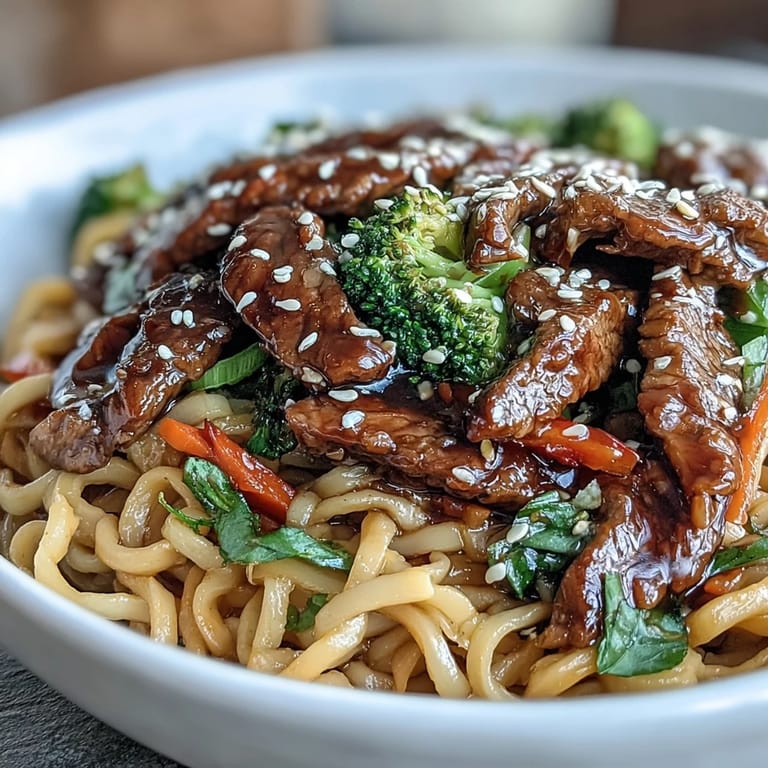
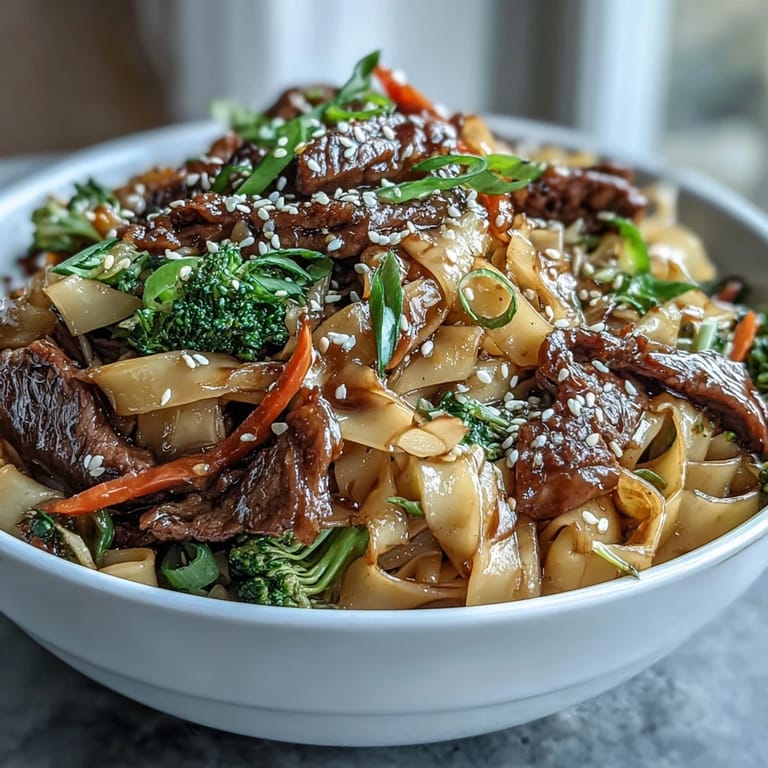
- Return the beef to the skillet and pour the sauce over everything, stirring to coat. Add the cooked rice noodles and gently toss everything together for about 2 minutes until the noodles are heated through and evenly coated in that sticky, sweet-savory glaze.
- Finish and serve:
- Transfer the noodles to a serving bowl or individual plates, then scatter chopped green onions and sesame seeds over the top. Serve immediately while it's still steaming.
 Save to Pinterest
 The first time I brought this to a potluck, I worried it wouldn't travel well and the noodles would stick together in the container. But when I opened the lid and gave it a quick toss with tongs, everything loosened up and people lined up with their plates. One friend asked if I'd ordered it from a restaurant, and I just smiled and told her it took me less than an hour. That's when I realized this dish had become my secret weapon for looking like I knew what I was doing in the kitchen.
Making It Your Own
You can toss in snap peas, zucchini, or even mushrooms if that's what you have on hand. I've also stirred in a spoonful of gochujang or sriracha when I wanted a spicy kick, and it turned the sauce into something smoky and bold. If you're not a beef person, chicken thighs or even crispy tofu work beautifully, soaking up the sauce just as well. The beauty of this recipe is that it bends to whatever you're craving or whatever's in your fridge.
Storing and Reheating
Leftovers keep in an airtight container in the fridge for up to three days, and I've eaten them cold straight from the container more than once. When you reheat them, add a splash of water or a drizzle of sesame oil to loosen the noodles, then warm them in a skillet over medium heat. The microwave works too, but the skillet brings back that just-cooked texture and keeps the vegetables from getting soggy. I've never had leftovers last longer than two days, though, because someone always sneaks into the kitchen for a midnight snack.
Tools and Timing
A large skillet or wok is essential here because you need the space to toss everything without ingredients flying onto the stovetop. I use a saucepan for the noodles and a small bowl for mixing the sauce, plus a sharp chef's knife to slice the beef and julienne the carrot. Tongs or a sturdy spatula make tossing the noodles easier, and a cutting board big enough to hold all your prep keeps things organized.
- Get all your ingredients prepped before you start cooking, because once the skillet heats up everything moves fast.
- If you're doubling the recipe, cook the beef in two batches so it sears instead of steams.
- Taste the sauce before adding it to the skillet and adjust the sweetness or saltiness to your preference.
 Save to Pinterest
 This dish has become my go-to when I want something that feels special but doesn't require a grocery list a mile long. Every time I make it, the kitchen fills with that same sweet, garlicky smell that first pulled me in, and I remember why I kept coming back to it.
Recipe FAQs
- → What cut of beef works best?
Flank steak sliced thinly against the grain ensures tenderness. Sirloin or skirt steak also work well when properly sliced.
- → Can I make this spicy?
Add sriracha or gochujang to the sauce for heat. Start with one teaspoon and adjust to your preferred spice level.
- → How do I prevent soggy noodles?
Cook noodles according to package directions, drain well, and add them last. Toss gently just until coated and heated through.
- → What vegetables can I substitute?
Snap peas, zucchini, shiitake mushrooms, or baby corn work beautifully. Maintain similar cooking times for even results.
- → How long do leftovers keep?
Store in airtight containers for up to 3 days. Reheat gently with a splash of water to refresh the sauce coating.
- → Can I use other proteins?
Sliced chicken breast, shrimp, or firm tofu make excellent substitutes. Adjust cooking times accordingly—shrimp cooks faster, tofu needs less time.