 Save to Pinterest
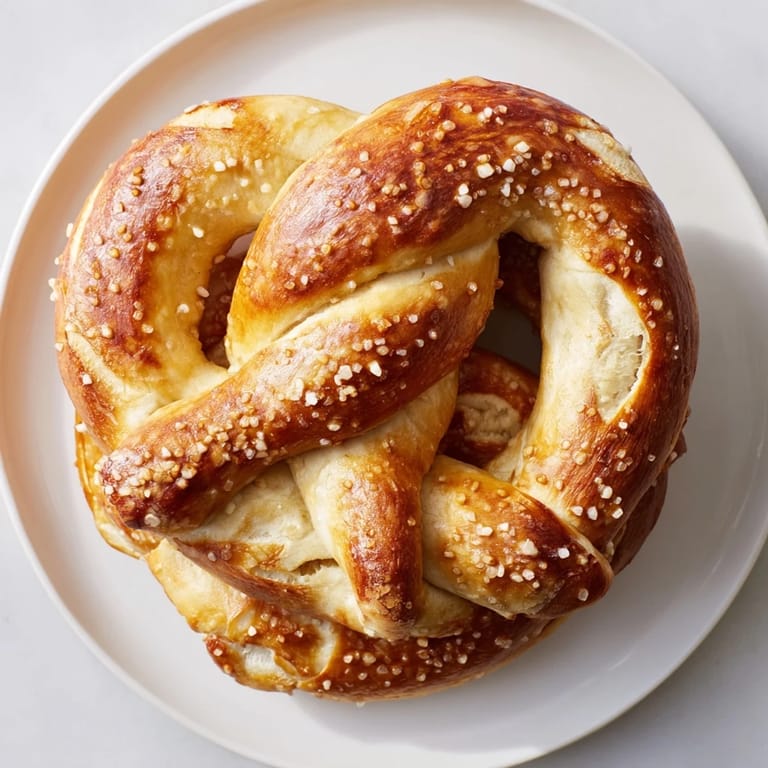
 There's something almost magical about the moment a pretzel emerges from boiling water—that peculiar sizzle, the way the surface transforms into this deep mahogany sheen that promises a crispy exterior and tender crumb inside. I discovered soft pretzels by accident one winter afternoon, watching a street vendor in Philadelphia, and became completely mesmerized by how she'd twist the dough with such confident speed. I went home determined to recreate that magic, and after a few experimental batches (and one memorable flop where I forgot the baking soda bath entirely), I finally understood why these pretzels had captivated people for centuries.
I made these for a Super Bowl party last winter, and I still remember my friend Marcus grabbing his third pretzel and saying they tasted better than anything he'd ever bought at a stadium. The whole kitchen smelled like warm bread and salt, and watching people tear into something you'd shaped with your own hands felt like the purest kind of cooking satisfaction—no fancy plating required, just honest, delicious carbs.
Ingredients
- Bread flour (4 cups): The higher protein content gives pretzels their signature chew; all-purpose works in a pinch, but bread flour is worth seeking out.
- Warm water (1 ½ cups): Temperature matters here—too hot kills the yeast, too cold and it won't wake up; aim for that perfect warm-to-the-touch feel, around 110°F.
- Active dry yeast (2 ¼ tsp): One packet; check the expiration date because stale yeast means flat, sad pretzels with zero rise.
- Granulated sugar (1 tbsp): This feeds the yeast and helps create that beautiful golden color during baking.
- Kosher salt (2 tsp): For the dough; it enhances flavor and controls fermentation, so don't skip it or reduce it.
- Unsalted butter (2 tbsp, melted): Adds richness and tenderness; melted rather than softened helps it distribute evenly through the dough.
- Baking soda (⅔ cup): This is the transformative ingredient—it raises the pH of the dough, creating that deep brown exterior and uniquely chewy crust you can't replicate any other way.
- Egg yolk wash (1 large yolk + 1 tbsp water): Creates a beautiful glossy sheen and helps the salt adhere, so don't skip brushing.
- Coarse pretzel salt: Worth buying specifically because those large crystals stay on the surface instead of dissolving into the dough like table salt would.
- Yellow or spicy brown mustard: For serving; tangy mustard is the classic companion, though honey mustard works beautifully too.
Tired of Takeout? 🥡
Get 10 meals you can make faster than delivery arrives. Seriously.
One email. No spam. Unsubscribe anytime.
Instructions
- Activate the yeast:
- In a large bowl, combine warm water, sugar, and yeast, then let it sit for about 5 minutes until it becomes foamy and smells wonderfully yeasty. This foam is your signal that the yeast is alive and ready to work its magic.
- Build the dough:
- Add melted butter and salt to your foamy mixture, then stir in the flour gradually, one cup at a time, until a rough, shaggy dough forms. You'll feel it come together, and that's when you know you're ready to knead.
- Knead until smooth:
- Turn the dough onto a floured surface and knead for 5–7 minutes, working it until it becomes smooth, elastic, and slightly springy to the touch. This development of gluten is what gives pretzels their distinctive chewiness.
- First rise:
- Place the dough in a lightly oiled bowl, cover it loosely with a towel, and let it rise in a warm spot for about 1 hour until it's doubled in size. The warmest place in my kitchen is on top of the radiator, but a turned-off oven with the light on works beautifully too.
- Prepare your setup:
- While the dough rises, preheat your oven to 450°F and line two baking sheets with parchment paper. In a large pot, bring 10 cups of water and ⅔ cup of baking soda to a rolling boil—this is essential, as the boiling bath is what transforms ordinary bread into true pretzels.
- Shape the pretzels:
- Punch down your risen dough, divide it into 8 equal pieces (I use a bench scraper and a scale for consistency), and roll each piece into a rope about 20–22 inches long. Form a U-shape, twist the two ends together twice, then fold the twisted ends down over the curve of the U to create that classic pretzel silhouette.
- The baking soda bath:
- Working carefully with a slotted spatula, dip each pretzel into the boiling baking soda water for exactly 30 seconds—this is where the magic happens, creating that deep color and chewy crust. Transfer each pretzel to your prepared baking sheet, handling them gently as they're delicate right after the bath.
- Egg wash and salt:
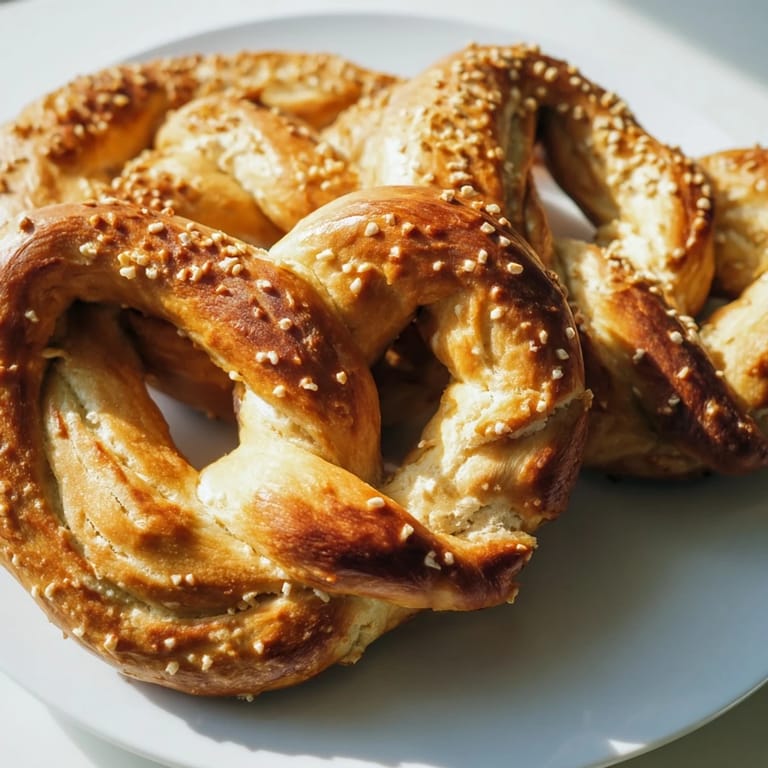
- Brush each pretzel with the beaten egg yolk mixture, then sprinkle generously with coarse salt while the egg wash is still wet so it clings perfectly. Don't be shy with the salt—that's what makes these irresistible.
- Bake to golden:
- Bake for 12–15 minutes until the pretzels turn a deep, mahogany brown. Your kitchen will smell absolutely incredible, and you'll probably have someone asking what you're baking before they even reach the kitchen doorway.
- Cool and serve:
- Let the pretzels cool slightly on a wire rack for just a few minutes—warm pretzels are infinitely better than cool ones. Serve them with mustard while they still have that perfect tender warmth.
 Save to Pinterest
 What struck me most while developing this recipe was realizing that pretzels aren't complicated—they're just a conversation between time, temperature, and chemistry. There's an elegance to how such simple ingredients transform into something so distinctly delicious.
The Magic of the Baking Soda Bath
The baking soda bath deserves its own moment of recognition because it's genuinely the difference between homemade pretzels and bread that happens to be twisted. When dough hits that boiling alkaline water, the exterior gelatinizes differently than regular bread would, and the Maillard reaction creates colors that ordinary baking can't achieve. This is also why you can't substitute this step with anything else—no amount of egg wash or clever oven tricks will replicate what the bath does.
Timing and Temperature
I learned the hard way that rushing fermentation results in disappointment, but I also learned that you have flexibility with rise time based on your kitchen's temperature. A cooler kitchen might need 75 minutes; a warm one might only need 45. The test is simple: when your dough has visibly doubled and a gentle poke leaves an indent that doesn't immediately spring back, it's ready. Temperature also matters for the water in your dough—use a kitchen thermometer if you have one, because yeast is sensitive and will thank you for the precision.
Variations Worth Trying
Once you master the basic pretzel, you'll start noticing how adaptable this recipe really is. The dough itself is your canvas, and the toppings are just the beginning of what's possible. I've experimented with everything from cinnamon sugar to everything bagel seasoning, and each variation feels like its own little discovery.
- Skip the salt and brush warm pretzels with melted butter, then toss with cinnamon sugar for a sweeter version that tastes like a special treat.
- Sprinkle with sesame seeds or poppy seeds before baking for a completely different texture and nutty flavor dimension.
- Serve with cheese sauce, spicy mustard, or even honey mustard if you want to dress them up for entertaining.
 Save to Pinterest
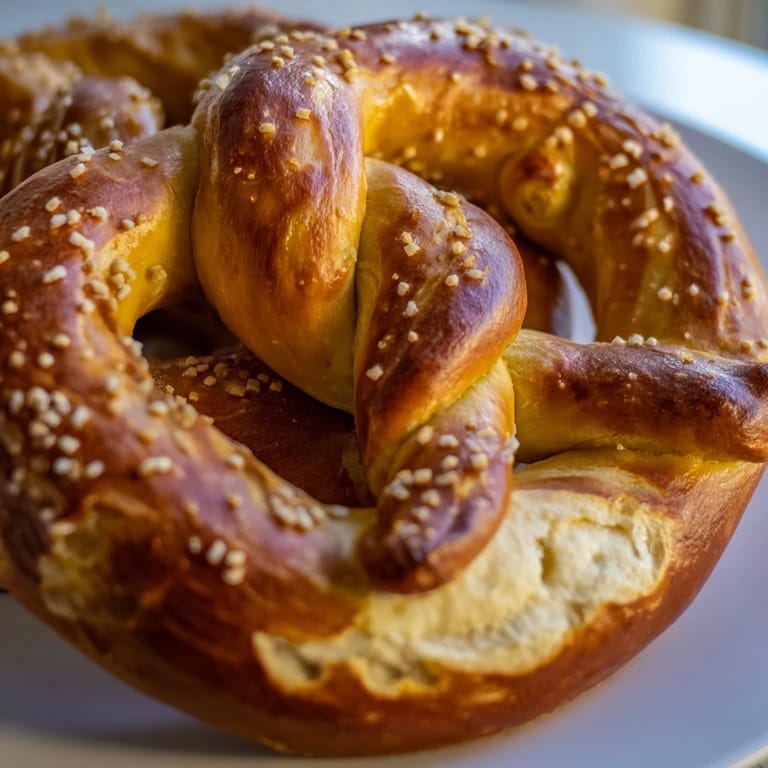
 There's something deeply satisfying about pulling warm pretzels from the oven and knowing you've made something that tastes like it came from a proper bakery. Serve them within an hour of baking while they're still warm, and watch how quickly they disappear.
Recipe FAQs
- → How do I get the pretzels soft and chewy?
Using bread flour combined with a baking soda bath before baking ensures a soft, chewy texture inside and a golden crust outside.
- → What temperature should I use to bake the pretzels?
Bake the pretzels at 450°F (230°C) until they become deeply golden brown, which usually takes around 12–15 minutes.
- → Can I add toppings other than coarse salt?
Yes, try sesame seeds, poppy seeds, or cinnamon sugar for a sweet variation after baking.
- → Why is the baking soda bath important?
The baking soda bath creates the distinctive crust and helps develop the rich color and flavor associated with traditional pretzels.
- → What is the best way to serve these pretzels?
Serve them warm with yellow or spicy brown mustard. Cheese sauce or honey mustard also make delicious accompaniments.