 Save to Pinterest
 Last October, I was standing in my kitchen on a particularly gray afternoon when my farmer's market haul included this gorgeous, burnished red kuri squash that caught my eye. I'd never worked with one before, but something about its shape and color made me want to roast it with warmth and spice. That single squash led me to build an entire bowl around it, layering in maple sweetness and a whisper of heat, and somehow it became the dish I kept making all through autumn and into winter.
I made this for my sister on a chilly Sunday and watched her take that first forkful, close her eyes, and ask what was in it—which is always the best compliment. She went back for seconds and thirds, and by the time she left, we'd already talked about all the ways she could adapt it in her own kitchen. That's when I knew this recipe had something special.
Ingredients
- Red kuri squash: About 2 lbs, seeded and cubed—this variety has thin skin and nutty sweetness that becomes pure silk when roasted, so don't substitute if you can find it, though butternut works fine too.
- Red onion: One medium bulb, sliced—the natural sugars caramelize beautifully alongside the squash and add a subtle sharpness.
- Kale: 2 cups chopped with stems removed—use whatever feels tender when you run your fingers along the leaf, and don't skip the wilting step or it'll feel raw against the warm roasted vegetables.
- Cooked quinoa: 1 cup optional but recommended—it absorbs the maple-vinegar drip and becomes nutty and grounding at the base of your bowl.
- Olive oil: 2 tbsp—regular is fine here since heat breaks down delicate oils anyway.
- Smoked paprika: 1½ tsp—this is what gives the whole bowl that subtle campfire quality.
- Ground cinnamon: 1 tsp—sounds odd with vegetables but trust it, the warmth plays beautifully with the maple.
- Ground cumin: ½ tsp—earthy and grounding, it ties the spice profile together.
- Chili flakes: ½ tsp adjusted to your heat tolerance—this is where personality enters the dish, so adjust freely.
- Sea salt: ¾ tsp—use the finer grind so it distributes evenly and doesn't add crunch.
- Black pepper: ¼ tsp freshly cracked—tastes miles better than pre-ground.
- Pure maple syrup: 2 tbsp—the real stuff matters here, it glazes and caramelizes rather than just sweetening.
- Apple cider vinegar: 1 tbsp—adds brightness that cuts through the richness and keeps the bowl from feeling heavy.
- Roasted pumpkin seeds: ¼ cup for garnish—the crunch is essential, and they're packed with minerals.
- Fresh cilantro: 2 tbsp chopped—a whisper of herbaceousness that lifts everything.
- Lime: 1 small wedge per bowl—the squeeze at the end is magic, really.
Tired of Takeout? 🥡
Get 10 meals you can make faster than delivery arrives. Seriously.
One email. No spam. Unsubscribe anytime.
Instructions
- Heat your oven and prep your stage:
- Set the oven to 400°F and line a baking sheet with parchment—this small step means zero cleanup and lets the vegetables caramelize properly without sticking. Everything needs to be ready to go because the timing moves quickly once you start.
- Coat the vegetables in their spice armor:
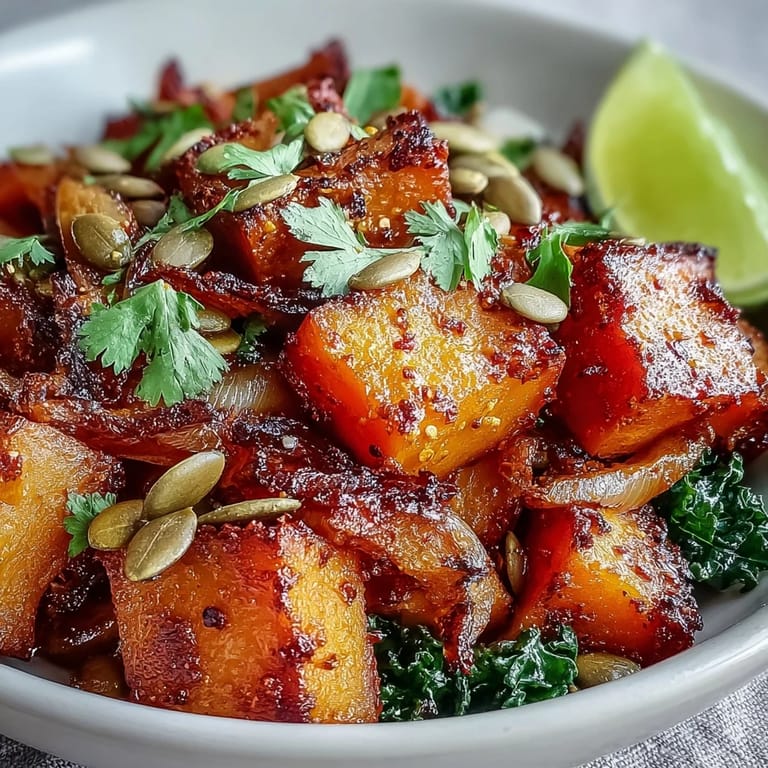
- In a large bowl, tumble your cubed squash and sliced red onion with the olive oil, then sprinkle in the smoked paprika, cinnamon, cumin, chili flakes, salt, and pepper, tossing until every piece is coated in that rust-colored spice mixture. You'll know it's ready when you can barely see the orange beneath the coating.
- Let them roast until golden:
- Spread everything in a single layer on your prepared sheet and slide into the oven for 25 minutes—don't overcrowd or they'll steam instead of caramelize. The kitchen will start smelling incredible around minute 20.
- Add the sweet-and-sour finish:
- Pull the pan from the oven, drizzle the maple syrup and apple cider vinegar across the vegetables, give everything a gentle toss, and return to the oven for 10 more minutes until the edges look caramelized and sticky. This step is where the magic happens, so don't skip it.
- Wilt the kale while vegetables finish:
- In a skillet over medium heat or in a steamer basket, cook your chopped kale for 2 to 3 minutes just until the leaves soften and darken—you want them wilted but still with a little life in them, not limp. Keep tasting as you go because the exact time depends on how finely you chopped.
- Build your bowls with intention:
- Start with a bed of warm quinoa if you're using it, then arrange the roasted squash, caramelized onions, and wilted kale on top so each spoonful gets a little of everything. Leave a small space in the center for the final garnishes.
- Finish with the toppings that matter:
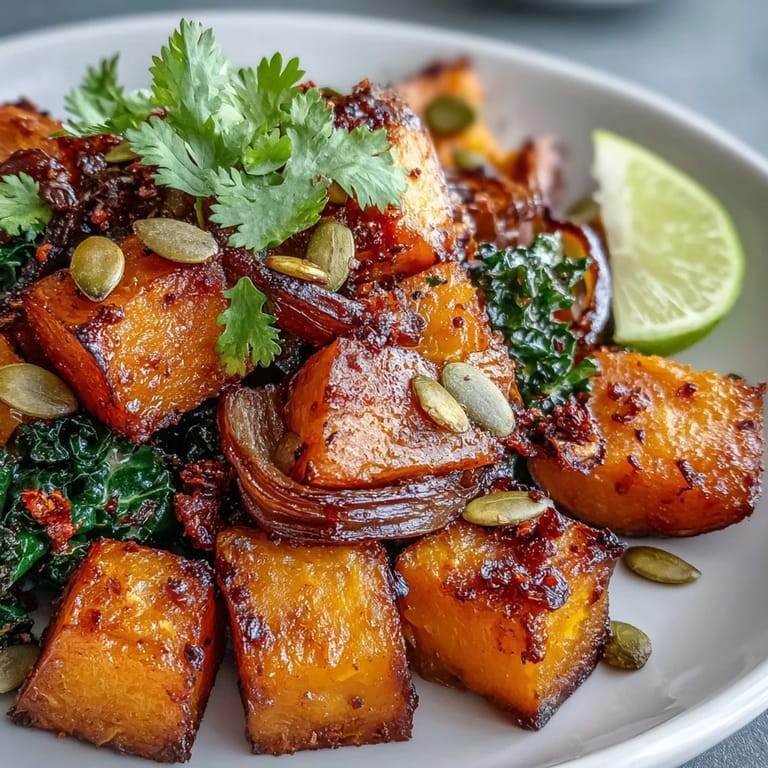
- Scatter the roasted pumpkin seeds across the top, sprinkle with fresh cilantro, and add a squeeze of lime juice at the very end—the brightness of the lime transforms the whole bowl from warm to vibrant.
 Save to Pinterest
 There's something about serving this bowl that makes people slow down and actually taste their food instead of just eating it. My neighbor came over and sat at my kitchen counter, and by the end of the meal she was leaning back with this satisfied smile, talking about how good simple food can be when you respect the ingredients.
Why This Bowl Feels Special
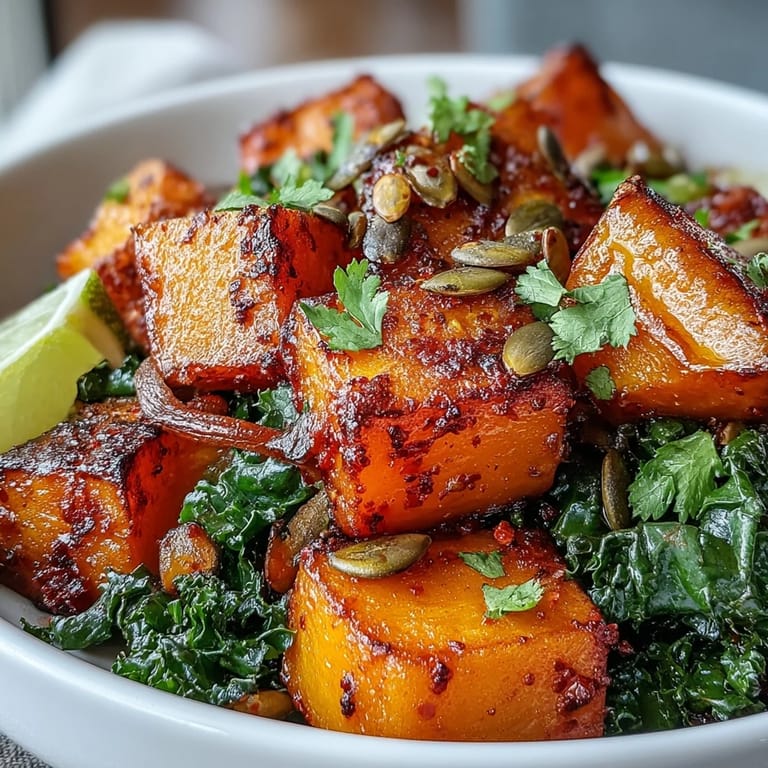
What makes this recipe stick with you isn't any single ingredient—it's the conversation between them. The squash provides a creamy base, the spices add warmth and complexity, the maple and vinegar dance back and forth on your palate, and the kale brings a necessary earthiness that grounds the whole experience. It's the kind of dish that feels indulgent but isn't, that feels seasonal but works year-round, that looks impressive but asks almost nothing of you.
Adaptations That Work
I've made this bowl a dozen different ways depending on what's in my kitchen or what I'm craving. Sometimes I add chickpeas for protein and earthiness, sometimes I swap the quinoa for farro or wild rice, and once I even piled it on top of creamy ricotta instead of grains. The skeleton of the recipe is strong enough to handle changes without losing its character, which is exactly what you want from something you'll make again and again.
Flavor Building and Pairing
This bowl holds its own alongside almost anything you'd want to drink with it—crisp white wines like Sauvignon Blanc are perfect, but I've also served it with sparkling cider, herbal tea, or just water infused with lemon. The warmth of the spices and the brightness of the lime mean it doesn't need a heavy wine, just something that refreshes your palate between bites. If you're serving this to guests, you might also consider tofu for extra protein, or swap the baby spinach if kale isn't your thing.
- A drizzle of tahini or avocado oil before serving adds richness if you want it.
- Leftover roasted vegetables are somehow even better the next day when the flavors have had time to meld.
- This scales beautifully for meal prep, just keep the lime and cilantro separate until you're ready to eat.
 Save to Pinterest
 This bowl became more than just a recipe for me—it's a moment I return to whenever I need something that tastes like home and feels like self-care in the same bite. Make it once and you'll understand why.
Recipe FAQs
- → What does red kuri squash taste like?
Red kuri squash has a sweet, nutty flavor with a creamy, smooth texture similar to pumpkin but more delicate. It roasts beautifully and becomes tender while holding its shape.
- → Can I make this bowl ahead of time?
The roasted squash and onions keep well in the refrigerator for up to 3 days. Store components separately and reheat the vegetables before assembling bowls with fresh garnishes.
- → Is red kuri squash the same as butternut squash?
While similar in sweetness, red kuri has a richer, more chestnut-like flavor and creamier texture than butternut. You can substitute butternut or kabocha squash if needed.
- → How do I adjust the spice level?
Reduce the chili flakes to 1/4 teaspoon for mild heat or increase to 1 teaspoon for a spicier bowl. The maple syrup helps balance the warmth, creating a harmonious sweet-spicy profile.
- → What protein additions work well?
Roasted chickpeas, grilled tofu cubes, or pan-seared tempeh complement the flavors perfectly. For non-vegetarians, roasted chicken or shredded pork would work beautifully.